Articles

Various non-fiction articles about things worth thinking about.

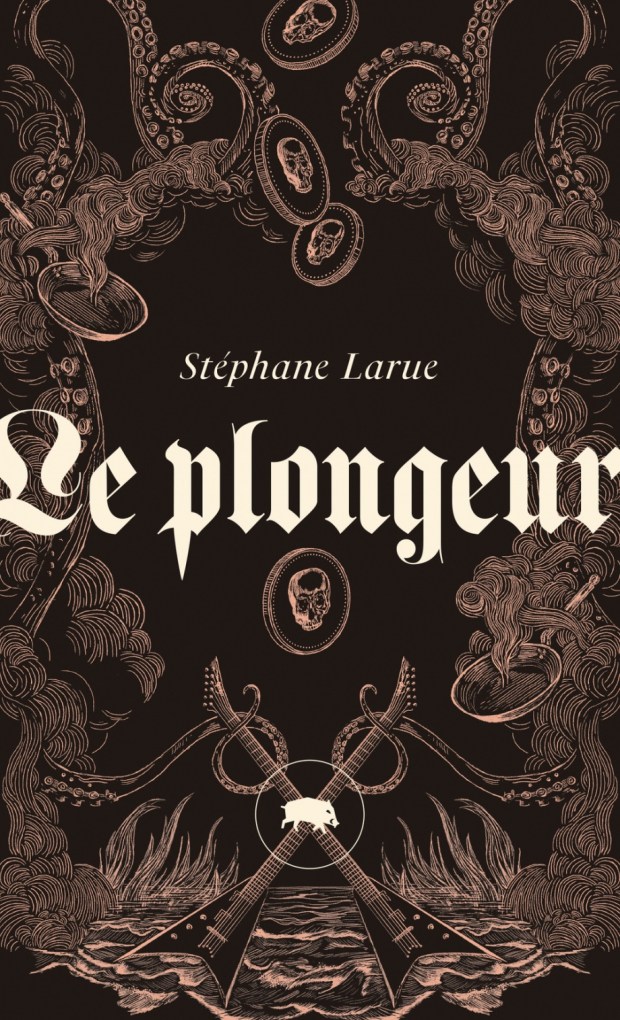
Critique littéraire : Le Plongeur de Stéphane Larue

Anthony Bourdain (“Kitchen Confidential”) + Montréal : ça vous excite?

Si oui, vous aimerez “Le Plongeur”.

Vous le savez déjà, c’est un jeune qui rentre dans l’univers de la plonge et de la nuit à Montréal, l’hiver.

Au sein des pages de ce récent momument de littérature québécoise, brillent des scènes vives et des décors exacts. On ressent bien l’intensité blanche et bruyante de la cuisine en service, la pénombre enneigée de la ruelle où l’on fume, les néons des clubs où d’autres dansent, l’atmosphère des bars où ça se saoul, l’air tendu des salles de bains où ça se drogue. Telle en une symphonie cyclique, s’ensuivent le chaos de la cuisine, le bordel de la brosse, la vibe chill des colocs, la lueur du bus tard la nuit, la solitude des appartements lointains et la couleur vive de certains souvenirs. Cette variété de tons à pour socle les nuits de l’hiver, que l’on voit sous tous ses visages froids, secs ou humides, avec ses floccons minces ou gras tombant dans les halos des lumières orangées sous lesquelles se déroulent la vie des gens.

Cela vous en donne peut-être l’idée : plutôt qu’une histoire, ce roman apparait tel un tableau. Sans pour autant dire qu’il n’y a aucune histoire, il n’y a pas de fil narratif central solide ou clair ici.

Pour certains, c’est sûr que, sans puissant moteur narratif, le roman, avec ses 560+ pages, paraitra long. Ce n’est pas un thriller, sachez-le. Plutôt, c’est un portrait de Montréal que Stéphane Larue réussit très bien à peindre. On y voit ses rues et ses gens de tous les âges et milieux. Tout comme dans la vie, jamais le lecteur n’a droit à la pleine histoire de qui que ce soit. Toutefois, jamais personnage ici n’apparait comme faux ou deux-dimensionnel, comme s’il s’écroulerait sous inspection rapprochée. C’est plutôt que la vie déferle, c’est une grande métropole, et jamais un individu ne connaitra beaucoup plus que la surface des multiples gens qu’il croise, déjà qu’il y a la difficile tâche de se connaitre et de se maitriser soi-même. Pour cela aussi, le monde du « Plongeur » semble vrai; il n’y a pas que les décors, mais c’est comme si l’on pouvait plonger bien plus profondément dans n’importe quel de ses personnages et découvrir là toute une autre histoire. Selon moi, ce n’est pas là une mince réussite.

Au centre, il faudrait aussi mentionner que le protagoniste n’a rien d’un héro mythique. Il est « juste un kid », perdu avec ses espoirs et ses défauts. Il ment souvent, a souvent honte, se fait rejeter parfois et est porté par des évènements plus grands que lui. Dans les plus tendres moments, certains personnages le supporteront, l’aimeront à leur manière, dans la mesure qu’ils le peuvent, étant eux aussi imparfaits. Qui ne saurait se renconnaitre, au moins un peu, là dedans? Surement que des gens qui ne lisent jamais de livres.

Le succès de ce roman, c’est qu’il assume pleinement son esthétique d’underworld montréalais, et que malgré son monde riche et détaillé, il n’a jamais l’allure fatigante de n’être qu’une liste. Quel beau monde ce serait, d’ailleurs, si toutes nos listes étaient aussi agérables à lire que ce roman.

Pour moi, la prose de Larue enchante. Je ne saurais dire exactement c’est quoi. C’est réaliste. C’est beau. C’est détaillé. C’est plein de gens imparfaits. Il n’y a pas d’héroïsme. Il n’y a pas de quête centrale pressante. Il n’y a que le combat des jours. C’est la vie, quoi, et comme dans la vie certains n’aimeront pas le chaos des lieux décrits, mais pour d’autres, comme pour moi, « Le Plongeur » irradie d’une certaine poésie naturelle qui chatouille et qui rappelle les nuits buzzées et enneigées de la vie telle qu’on la voyait auparavant.

À lire pour gens qui ont déjà connu, ou qui souhaitent connaître, la rejection adolescente, les gens imparfaits et les nuits brûlées.

Days & Nights : A Literary Review

I read the book Days & Nights by Konstantin Simonov unexpectedly.

In a period of grief, I pulled it from a shelf. At first, it gave me an excuse to cry. But over the weeks I was drawn into it’s powerful narrative, that of Russian officers and soldiers struggling through the horrors of Stalingrad.

Used to a cultural sphere that portrays war as Hollywood action, the sparse yet vivid prose of Simonov was a breath of fresh air. There is fighting, and men die in the book as they did in real life, yet there is no excess in this, no exaggeration, no poetry, and no special effects either. Rather, it is gripping and raw. The scene in the middle of the book, the one in the brick rubble, is especially poignant in this regard.

Simonov shows us the life of a commanding officer, his decisions and his relationship with his inferior and superior comrades, all of whom glow with the light of realism, each having their quirks, their pasts and their hopes. All of them express compelling thoughts, shrouded as they are by war. The novel has love and betrayal, chaos and calm conversations, despair and hope. The book is nationalistic, yes, but more than this it is human.

What to say? It was an unexpected read which brimmed with the true experience of war. Simonov depicts beautifully the upswing of victory to come, and yet within it is such feeling for all that was lost and for all the hardships yet to come. The result is a perfect juxtaposition of human trials and successes, an image of the dual nature of our both blessed and cursed world. This novel is a great work. May there be more Simonovs in this world, and may there never again be a Stalingrad.


Find the book here : https://www.goodreads.com/book/show/10483917-days-and-nights

The Spectrum of Consciousness

colour spectrum


This is the spectrum of colours. All humans can see it. However, we do not all see it the same way. Reading as you are the English words of this article, then its likely that you automatically divide this spectrum as: Violet, Indigo, Blue, Green, Yellow, Orange, and Red. Each colour clearly ends and is divided in another. This is a truth of the universe is it not?

Well, actually it isn’t. (more…)

Tomorrow Never Comes

The past can be a dangerous thing, and so can the future. There is a peculiar gloom that comes with the thought that things used to be better, and that you are going downhill. Conversely, there is a peculiarly elevating feeling from the thought that things are “getting better all the time” as the Beatles say. That’s pretty simple. Most people would probably agree that its better to feel like things are getting better than that things are getting worse (regardless of if they are). However, neither is good, so by default then neither can be bad. Let me explain. (more…)

Second Look at Social Conditioning: Dependence

It was a nice sunny Wednesday afternoon, and I was walking through a park downtown. The breeze was blowing, ducks were quacking, and up ahead a man was lying down on the path not moving. Some people walked on by without a second glance, some began to gather around, as did I, but all kept their distances. I heard some people say that he was sleeping, others that he was drunk. However, by simply moving around to see his face I clearly saw that he wasn’t sleeping. Blood stained his hair and a red streak was leaking from his open and glassy eye. We huddled around un-assuredly, and someone called 911. (more…)

The Importance of Changing Perspectives

Raise your hand in front of you, palm outwards, and look at it. Take a moment to take it in, and see its shape, see what it is. Now turn it over and look at your palm. Once you’ve taken that in, spin it around. Look at it from close, far, up or down; move your fingers around. What you have just done is exactly what you did when you were first born and were exploring the world. This is the first thing you did; your own hands and feet were the first subjects in your life of discovery. This is the innate wisdom of the child. We spin our hands around to get multiple takes on them because simply looking at your extended hand without seeing the palm or where the skin bends in the joints it is difficult to know what it is, and what it is for. Sure this might sound silly now, but that is because you know what hands are. When you were born you had no idea, and this is how you started the exploration of hands, most likely followed by experiments with smell and taste. (more…)

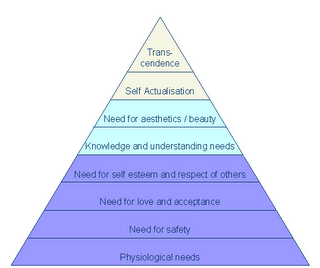
Cement Organisms Part II – Symbiotic Needs and Maslow

Foreword

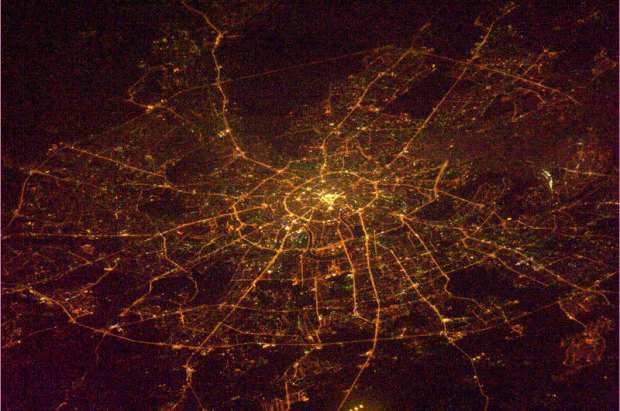
Cities are, by virtue of being composed of living Humans, alive themselves. This was demonstrated by comparing Cities to the 7 Characteristics of Life in the first part of this mini series. In the second part we will shift the focus from the physiology to the psychology of Cities. (more…)

Cement Organisms Part I – The Spirit Of Cities

Humans have a curious tendency to regard and speak of Cities as if they were a single entity, or even alive. A closer look can explain that tendency, as resemblances between Humans and Cities are multiple and strong. Like Humans, Cities have clearly defined limits in space, purposes (such as resource exploitation or political governance), they have their own character, and most importantly they have their own names. Every community, from town to city, has its own vibe, spirit, or character that is created or perceived by inhabitants and tourists, which, like any individual, make it unique. Like peoples, communal identities are shaped and influenced by the history and the experiences of the community, which in turn influence the identities of the individuals living within its bosom. This is a symbiotic relationship that is witnessed in all communities whatever the size, and indeed is the very premise behind culture. (more…)

The Little Tree That Almost Could

I remember a quiet suburb surrounded by a nice forest and a relative natural silence, the kind that can’t be found there anymore. I still remember the kitchen that I would run around in, and remember playing on the driveway of that first home. Then, my family tree grew: sister was born, and we moved to a new house further from town.

Down the main road that brought us to the intersection with lights, cars, and people were a few shaded homes, rolling fields that would grow grass and flowers, or sometimes crops. I recall the forest along this road that stretched around the fields. One morning when my sister could toddle and I was getting rides to my early years of school, I noticed an abandoned barn that had the roof caved in.  I had seen it before, but now it was changing in appearance. I noticed a young sprouting tree, making the most of the rain-time and sunshine pouring in from the caved roof, planting its young roots in life just like me. (more…)

December 21st: Fact, Theories, and Mysteries

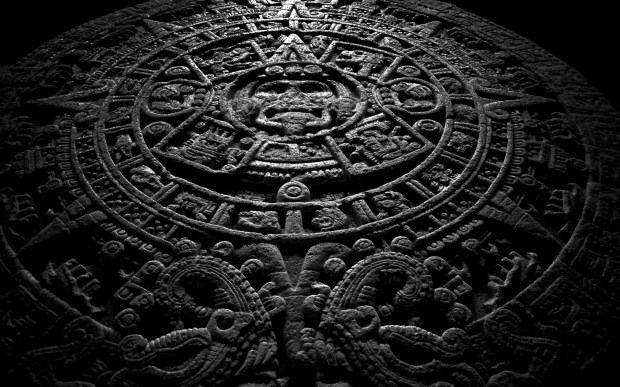
There’s a lot of controversy, fear, and conspiracy surrounding December 21st 2012. By now most people in the world have heard about it, yet very few people know what it is about. One widely circulated idea is that it will bring the apocalypse, or the end of the world in some way. There is much material out there arguing one side or the other, but few seem based on rational thought or analysis. I do not claim to know the answer as to what will happen on that future date, but I do want to lay down some facts and some of the theories, so that people can make their own informed opinion. (more…)