Foreword
Cities are, by virtue of being composed of living Humans, alive themselves. This was demonstrated by comparing Cities to the 7 Characteristics of Life in the first part of this mini series. In the second part we will shift the focus from the physiology to the psychology of Cities.
Because Cities are composed of feeling and thinking Humans they are therefore subjected to the same desires as Humans. The needs and desires of Mankind and of Cities are ordered in psychology in the Maslow Hierarchy Of Needs. The original Hierarchy Of Needs established by Abraham Maslow in 1954 outlined the needs of Human beings, and organized them in order of importance. It looked like this:
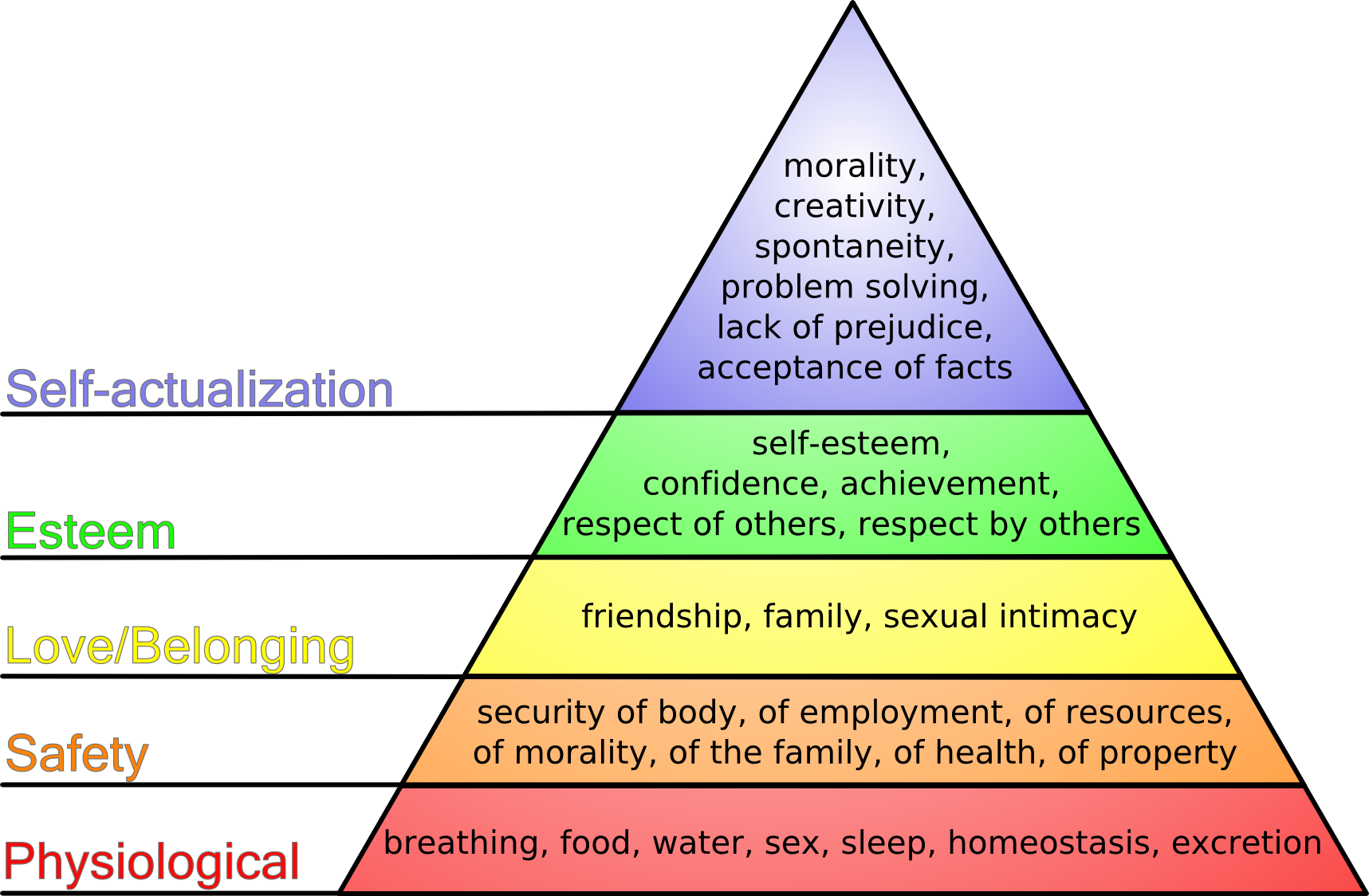
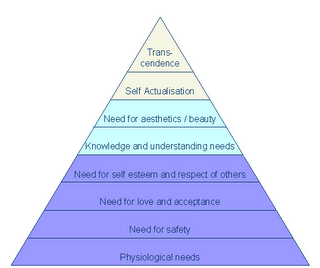
However further conclusions were derived from Maslow’s work after 1954 leading to the addition of three other categories, the order now being:
For the intents and purposes of this paper we shall look at the expanded list, which is now widely accepted, for maximum exploration of the symbiosis in the psychology of City and Citizen.
Introduction
There is strength in numbers. By banding together have Humans found a simpler way to satisfy their basic needs by having a network of other individuals with which to share the responsibilities, with which to defend in case of threat, and who’s potential victimization in case of real danger increases individual survival chances. As the idea evolved so too did societal capacity to cope with the primal conundrums posed by the first two needs of Maslow. Thusly, societies and Cities evolved to allow fairly easy satisfaction of the needs that previous generations of inhabitants had already seen to and integrated in the collective structure of the City itself. As mentioned in Part 1, societies that last longer than the individual allow for progress to be saved from generation to generation. Freedom from fear, starvation, and predators allowed exploration of ideas not imminently important to survival giving birth to the complex inventions and theories of Man, which were built on and added onto collections of knowledge that slowly grow and change over hundreds of years. The same concept applies to some degree to the progress of satisfaction of needs in society. The phenomenon of the City that sees the consolidation of individuals creates a stepping-stone that aids in the climbing of the Maslow pyramid offering better chances to dabble in the noble arts of Humanity of the higher degrees. In clear example of symbiosis, Citizens seeking to satisfy their own needs tend to streamline the City’s capacity to provide for those needs for those in need thereby allowing the next generations to strive for higher degree of desires in turn elevating the City up its own Hierarchy of Needs. This can be demonstrated by applying the Maslow Hierarchy of Needs to both Cities and their Citizens.
1.Physiological Needs: The first desire to fulfill in Maslow’s theory is physiological needs. This means that a Human’s first desire is to satisfy the body allowing survival by fulfilling hunger, thirst, as well as the needs for sex, sleep, and shelter. The satisfaction of the base needs is required for Cities to live. Cities are always born at foundation next to water and food sources, preferably in resource rich areas. Cities might not physically drink water or eat food, but their bodies are composed of living Human beings that require it to live, and thus the City requires it to exist. This is the beginning of the symbiotic relationship of satisfaction that we will be exploring. By its enabling location and with the work of its residents, a City can satisfy the base needs of its residents, which in turn allows the City to exist and to attempt to satisfy its own higher needs. It offers fresh water, food, sheltered homes to sleep in, and more potential sexual partners than Humans would find in nomadic life styles. As for the sexual needs of the City itself, they are satisfied in a different way. As explored in Part 1 Cities do reproduce, but culturally, and in a method that is more reminiscent of spores than mammals. In this case, the sexual satisfaction of City lies within its resident’s satisfaction.
2.Safety Needs: Once Humans and Cities have satisfied their physiological needs, the concern turns towards the preservation of that physiology. Humans want to be safe from harm and want to have some stability in knowing where their next meal, or paycheck is coming from. In essence people don’t want to always be out hunting never sure that they will eat that night. This, with the satisfaction of the first need, was one of the reasons for the foundation of Cities. Living in greater number within permanent houses surrounded by defensive walls allows Citizens peaceful rest instead of the alert lion-fearing interludes of their ancestors. Similarly, Cities in their desire to exist as expressed by the collective desires of its Citizens will take on measures to assure its survival. The Cities of mankind have always been founded near water and food yes, but ideally also in places that were also easily defendable and resource rich. Then sentinels were posted, walls were built, armies were levied, and economies were developed. These are all ways for the Citizen-City circle to assure its safety. The first three guarantee some physical safety, and the economy provides resource security and peace of mind. Ideally, Cities will have economies based on multiple stable resources. Cities that are founded on unstable economic sources expose themselves to danger, as evidenced by the dead Cities embodied as ghost towns. Stable economic development means that residents and society alike know that there is work and food to fuel growth at least in the short term allowing the passage into the satisfaction of the third need.
As is unfortunately obvious globally, not all modern Humans born in our stable and large modern Cities have their first two needs met and taken care of, but many of the species never have to worry about these things to the same intense degree of yore. Though not perfect, this is already a great improvement over our Nomadic ancestors, who lived their whole lives with no guarantee that these first two needs would be met. The higher needs get a bit trickier however, and a City’s capability to satisfy those needs tends to decrease the higher up the pyramid it is. As the level increases, the pressure of the relationship gradually shifts from the City to the individuals.
3.Love and Belonging: When in no immediate threat, and with a stable life style Humans seek attention and love. Everyone wants to belong to a group and feel included. Cities offer this to their Citizens by the simple existential act of being a community. By living within the walls of a village, the resident is grouped with the others who live within the same walls, and distanced from those that do not. This is a deplorable side effect that is thankfully decreasing as the scope of Human establishment and communications grows. Simply by reuniting people in an area with a common interest of ensuring their survival, and therefore the City’s survival, a sense of community and belonging to this group is created. Furthermore, this proximity to other people and satisfaction of the first two needs permits the development and pursuit of varied interests, and the forming of esoteric groups mirroring the specialization of cells on the physical page of Part 1. Though Citizens are united by their common settlement, certain Citizens are closer to each other because they frequent the same places, have the same interest or religions, are of the same social standing, and so on. Among other things, this communal desire is one of the strengths of religion, and is one of the forces behind racism.
It is at this stage that the City starts to satisfy its own needs as an organism as well as those of its individual residents. Cities seek increased security, and arguably friendship, in alliances with other Cities. The courting and joining of like-minded Cities is very similar to the grouping of people, but is primarily based on proximity and culture. Whereas mobile people tend to associate by common pursuits rather than proximity, the issue is not the same for rooted Cities. Ultimately, by being close to each other Cities develop similar kinds of industry, or culture and ideas as they influence each other in the culture spreading and reproduction method explored in Part 1. By joining together with other Cities, to form alliances at first, and eventually countries allowing increased safety and the trumping of the feeling of simply being one City in an ocean of thousands of others fulfilling the desire of greater belonging. The allied City is no longer a settlement existing simply for the sake of existing, but can now biasedly view itself as a vital part of a vibrant country and contributor to that state’s prosperity, glory and development. Its voice and opinion can influence the method of thought, or course of action of a body larger than itself; a satisfying feeling. This community feeling feeds back into the citizenry and strengthens identity. The citizen is no longer simply an Alexandrian, for example, but also an Egyptian. Thus is born a feeling of community embodied as patriotism, and more negatively as chauvinistic nationalism.
The slit between the third and fourth stones of the pyramids offers a cozy area to nestle the reminder that the Hierarchy of Needs is not unwavering in order. Experiencing some of the higher desires without absolute fulfillment of the baser ones is Human and normal. A jobless man is not impervious to the desire for love and respect despite the weakened second need, and this remains true between all needs.
4.Esteem: Belonging to a group and feeling essential to it are two different things. When people belong to a group they want to feel that their presence actually matters, that others respect and esteem them. This category was divided into two by Maslow as: “Low Esteem” and “High Esteem”. This is not be confused with levels of esteem individuals receive. Rather, Low Esteem refers to the need to be esteemed and respected by other whereas High Esteem refers to the need to be esteemed and respected by one’s own self. The need to be respected both High and Low is a driving factor behind actions such as taking up a hobby, taking pride in one’s work or appearance on the brighter side nature, and inferiority complexes and insults in attempt to lower others around oneself for relative height on the darker side.
At this stage, Cities begin more and more to depend on Citizens to develop the needs rather than the other way around. Unfortunately, being born in a City does not mean an individual will necessarily love him or herself, nor does it guarantee the love from others though they belong to a common group. This stage is more elusive and harder to attain. Maslow estimated only 40% of Americans (in 1954) attained this stage. Cities with evident esteem for themselves and from other Cities are not rare through history, but they are not in abundance either. The quest for obvious examples draws the mind to Cities like Athens, which thrived culturally, scientifically, economically, and militarily in an ancient world still filled with simple mud huts to the awe of all including the Athenians themselves. Mecca is esteemed and respected as a spiritual capital of the world, and Rome was a beacon of might and power. However, not only illustrious worldwide famous Cities have high and low esteem just as not all self respecting Humans are famous. Towns can pride themselves on their craft. For example Carrara, Italy is a small City that lives next to

The world’s largest rocking chair located in Gulfport, Mississippi
Rome. Though it never was as famous as Rome it had some of the best marble quarries of the Empire, and it was Carraran marble that was used for construction of monuments such as the Pantheon and Trajan Comlum, among others, in the Imperial capital.
Indeed fame is not required for respect; the important part is self-esteem. Fame or glory will not help until there is self-acceptance, as can be sadly witnessed by celebrity burnouts that make up the perverse spectacles of contemporary society. Consequently, even the smallest of towns will usually have some local story or trait to boast about whether that be craft making, local dishes, or even large wooden chairs.
5.Cognitive: This need was not outlined by Maslow originally, but was added in the 1970s by others who studied and built on his work. This need refers to the Human desire to learn. Once people have secured their physical and social well-being they turn to the intellectual level. This is not to say that every intellectual has satisfied every prior need nor does it mean that non-intellectual people have not satisfied theirs, nor is it a measure of knowledge, it is more like a measure of curiosity. The mascot of this trait is the child for whom everything is new and in whom curiosity abounds for everything.
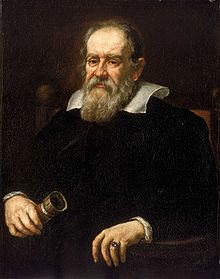
Galileo went against popular beliefs with his revolutionary Heliocentrism, yet backed down when his second need was threatened by the Vatican
The success stories of this stage can be seen in individuals through the great shakers, thinkers, and inventors of our species, and broadly in the general technological and ideological progress of Mankind. The enlightenment centres of history prove that this need is still fulfillable on a collective level. One can think, again, of Athens pioneering democracy and spearheading many intellectual innovations, or of ancient Alexandria with its free intellectual atmosphere embodied by its illustrious library, or of Florence who, torch in hand, led Europe out of the dark Ages.
The codependent relationship is very clear here as is the shifting pressure from the collective to individuals to take the lead. Ideological Cities became such because they satisfied their Citizens ‘ four other needs to a sufficient degree. One who is in constant fear of lions, or who thinks he or she is undervalued and that their ideas are inferior do not pioneer new models to run entire Cities, countries, or even species. In return for a safe bosom to develop ideas, Citizens then shower the City with glory and fame as centers of intellect and advancement, furthering its fourth need respect in its own eyes and the eyes of others. In turn, as the City gains prestige and confidence it creates an atmosphere that encourages other Citizens to reach these heights, having a contagious and positive effect – all Athenian male Citizens participated in the ruling process, Alexandria’s library was surrounded by thinking individuals not close minded fools. This in turn creates a broader base of satisfied Citizens whose collective reach will propel the City, and its other Citizens, ever higher in the pyramid.
6.Aesthetic: With love and understanding comes a greater comprehension and appreciation of the beauty of the World. This by no means refers to egotistical exterior self-beauty. Rather it refers to finding beauty in the work and research accomplished, in the world, and in things held dear by the individual or the society. This is finding beauty in oneself that is more than skin deep because one recognizes noble and great things in the exterior world, and then finds them within or vice versa. This appreciation of beauty can be expressed in forms of art such as music or painting on the individualistic level, and in architecture and ideology on a collective level, though expression is by no mean constrained to those mediums. Maslow expressed this need (not yet separately classified in his time but existing none the less) as needing to find beauty in nature in order to restore and balance the Soul to proceed to the next step. Indeed, the analysis and determination of what one finds beautiful is crucial to the fulfillment of the next need.
7.Self-Actualization: Self-Actualization was the pinnacle of the original hierarchy laid out by Maslow. In this stage Humans are fully themselves and exploit their potential to the maximum constantly striving to learn more and better themselves. The figures Maslow studied while trying to understand self-actualizers included Abraham Lincoln and Albert Einstein. However, as with Carrara I suspect not every self-actualizer was famous. Looking for examples of self-actualizers, even individually, is more difficult than at the other stages simply because it is a more difficult stage to accomplish, and since it takes multiple people at the same stage to bring up a City to that level it becomes difficult to find Cities that have reached this summit. I am tempted to mention Athens again, but one cannot be sure of the level reached by Cities in the past as history is often, if not always, biased and embellished. Rather let us look at some of the qualities attributed to self-actualizers and I invite the reader to think of individuals or societies known to them that match the criteria:
- Acceptance of self and others as they are
- Spontaneous
- Creative
- Concerned about the welfare of Humanity
- Independence
- Individuality (not afraid to take own path/stick out)
- Responsible and hard working
I believe these heights have been reached a fair amount of times by Humans. Artists such as John Lennon, or leaders such as Martin Luther King and Gandhi come to mind, and presumably some of the societies cited as examples previously have reached these heights, at least temporarily, while they were in their prime though certainty remains elusive. The next need is one that has not been attained by many, but that has nonetheless remained present in Humanity as a concept of divine order.
8.Transcendence: This last desire was added to the list in the 1990s and outlines the Human desire to help others achieve happiness and Self-Actualization. This stage is reached by self-actualizers with enough physical safety, love, esteem, and knowledge in their own lives that they no longer need to help themselves, and thusly turn to the altruistic tendencies of helping Humanity. It is described by some as the trumping of the ego and ultimate realization that we are one collective species, world, and consciousness. Coincidentally, this message of Oneness and altruism is the message behind much of religion, and has remained a distant and blurry goal for most of Human spiritual history.
As Everest, the peak of the physical world, was conquered by man so too has the peak of the moral and psychological world been witness to the boots of a rare few Humans who could contemplate from the peak their journey and conquest, and scream their lungs out in triumph. The individuals cited as examples of actualizers also reached this mountainous peak including in this category most of the spiritual leaders of history. Collectively however, one struggles to think of examples of societies that were at one time filled with Einsteins, Bouddhas, and MLKs in utopia. Indeed the closest examples come from the various global concepts of Heaven or Divinity rather than from any physical place. However, this attainement is the ultimate goal of Human the individual, and therefore of Human societies as well.
Though Humanity may never have attained the higher needs of the self as a collective (that we know of), we have had individuals pioneers to map out the way. Furthermore, as societies grow and develop it gives us as a species a bigger and better stepping stone to reach for those divine heights. Benevolent technologies, loving religious lesson based on countless hours of meditative thought, political systems that seek to include everyone, or social movements promoting equality, justice, and peace could not have been brought into existence by a species fearfully looking over its shoulder for predators while digging in the mud for worms to eat. The puzzling question of causality for the joining of Humans to create the life of Societies and Cities, mirroring the joining of atoms into cells and cells into consciousness explored and left open ended in Part 1 can be explained to some degree by realization of the stepping stone of society that permits easier scaling of the Hierarchy of Needs.
Over the slow course of the centuries Humanity has found in numbers both strength and companionship; ways of guaranteeing that the basic animalistic needs of Mankind were satisfied. This allowed the explorative pursuit of the Human arts of Loving, Respecting, Thinking, Beautifying and Sharing. By propping up a vast part of the population’s needs our species has effectively increased the chances for self-realization by saving precious time required to satisfy the animalistic survival instinct for allocation in higher pursuits. As these individuals reach these heights they further our understanding of these processes and pull up the rest of us by a small, but measurable degree. This is the process by which agriculture methods were developed and shared appeasing our first two needs of food and security, by which both Imperialism and Democracy were invented exploring and consolidating our third need to belong, and by which the inventors of the Internet have created this vast benevolent force for knowledge sharing allowing like never before the exploration of the fifth need of Cognitive exploration, and firmly consolidating the third need of communal unity on a global level.
Slowly, but surely, Humanity is raising the ground below its feet in order to be able to jump higher and higher. If the trends continue, and if we do not blow ourselves off this stepping stone back into the mud of the first need then perhaps one day not only will our society guarantee the satisfaction of the first two animalistic needs, but also of the Human needs of Love, Compassion, Education, and Respect for the Self and for the World, maybe then will our humble species be able to begin dabbling in the Divine arts of Collectivity and Oneness with all in a future that would be as unimaginable to us as our modern technology would have been unimaginable to the first Humans to construct mud huts.
 Julien Dupont
One comment