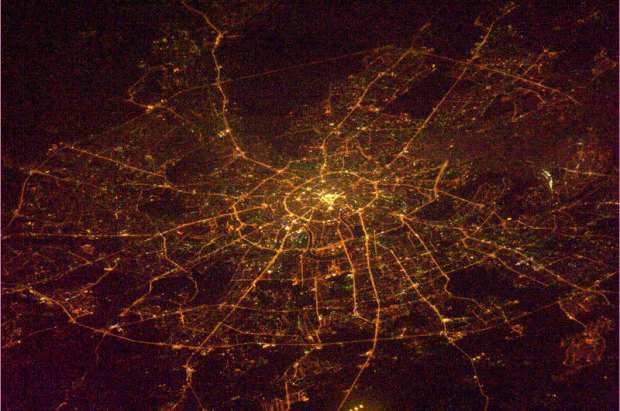
Humans have a curious tendency to regard and speak of Cities as if they were a single entity, or even alive. A closer look can explain that tendency, as resemblances between Humans and Cities are multiple and strong. Like Humans, Cities have clearly defined limits in space, purposes (such as resource exploitation or political governance), they have their own character, and most importantly they have their own names. Every community, from town to city, has its own vibe, spirit, or character that is created or perceived by inhabitants and tourists, which, like any individual, make it unique. Like peoples, communal identities are shaped and influenced by the history and the experiences of the community, which in turn influence the identities of the individuals living within its bosom. This is a symbiotic relationship that is witnessed in all communities whatever the size, and indeed is the very premise behind culture.
By constantly referring to cities by singular and proper names it is easy to forget that cities are in fact made, run, and represented by its population. However, it is perhaps unsurprising that a City takes on a life of its own as it is after all made up of living individual Humans. Cities, by virtue of being composed of living beings, are alive themselves as can be demonstrated by comparing them to the Seven Characteristics of Life. The Seven Characteristics of Life are criteria outlined in biology, which an organism must meet before it can be classified as living. When broken down one can easily perceive that Human settlements do in fact meet all of them.
The Seven Characteristics of Life
1. Life is composed of cells: Every life form is composed of cells, just as we are. Single cell organisms do everything they need to do to survive whereas multicellular organism end up with specialized cells that can only do certain things. In the case of a City, the population and the individuals that compose it play the role of the cells. A man can build a cabin in the forest and found his City – it is then a single celled organism. He alone must see to all the needs of the new life form. As his friends come to join him it becomes a multicellular organism. In this case the founder might continue to manage construction, say, while the new arrivals focus on gathering materials, growing food and so on. In this way, the growing number of people mimics our own bodies which have multiple cells grouped together as organs that each perform a certain task in unity with the others. Parallels can be easily drawn between the nervous system and the city hall, the circulatory system and the water and electricity departments, the waste disposal services as bodily waste management, the police department or army as the immune system, and so on. Each organ or organization is composed of countless cells, or people, which come and go and are replaced. But even as the cells of any system are replaced the specific function of the collective is continued, our livers churn on with new recruits, and our water treatment plants hire after another retires. Building can be seen as organs of the civic body, and just like a Human body that sheds and replaces all of its cells during its lifetime so too does a City shed its original populace and replace its constructions if it lives long enough.
2. Life Has Levels of Organization: Organization in our bodies is represented as cellular combination to make tissue, tissue combination to make specialized organs, which link with other organs to make organ systems, which linked with the other systems makes a complete organism. Organization and specialization in our collective bodies is expressed as people with a certain skill or interest which, for example, will start an electrical service company. That tissue is part of an organ composed of multiple electrical companies that make up that service, that need, or more commonly known as market, in the City. When linked, as they inevitably are, with other related organizations such as electricity producers and City grid planners, they make up the electrical system (or industry) of the City, which in turn combined with the other systems of combined companies make up the City’s smooth functioning.
3. Living Things Use of Energy: All organisms consume something and expel something else. For plants its carbon dioxide and sunshine into oxygen and nourishment, for Humans it is oxygen and food into carbon dioxide, energy, and poop. Cities continue the trend. They consume mass amounts of energy in order to allow it’s functioning. Electricity is at all times required to power the modern City, to light it up, make it run, make sure that all can operate smoothly. One only needs to look at how quickly things grind to a halt in the event of a blackout; it is a body without nourishment. Before the days of electricity Cities ran on alternate sources of energy such as mechanical energy in manpower, thermic energy in torches, furnaces, workshops, and so on. The output of Cities is seen in pollution. Air pollution is caused by the breathing of the City in the consumption or production of energy, dumps are filled with waste of the cells, rivers are polluted by water that has passed through the system and that was used for various things mirroring animal urine. We need food to power ourselves, but our cells need nourishment as well, and Cities do not only need electricity they need food to keep us, their cells, alive. Furthering the comparison between Humans and Cities, some urban centers are agricultural producers, or gather their own energy as witnessed by Cities built around farms, coal mines, hydro dams, or nuclear plants, whereas other municipalities buy their food and energy off the market instead dedicating themselves to other areas, in the same way that an accountant will purchase his energy that was ultimately produced by a farmer. The differences in occupation are present on all scales. It is simply a different specialization. The differences between a blood cell and a nerve cell, is the difference between the farmer and the lawyer, and is the difference between the urban centre and the rural town.
Other than waste, Humans and Cities produce things that are the labour of their energy. Cities do not take in energy to simply pollute as we do not eat simply for the joy of pooping. We move, create things and tend to the City, and in turn the City produces various things such as cars, computers, food, or in whatever its specialization lies to be sold and traded to other Cities (when not taken violently) in a system of cooperation that resembles the cooperation between organ systems to make an organism out of a country, or our of our planet.
4. Living things adapt to their environment: This is quite clear in the distinction one sees in between cities in different regions. At the moment of its birth, a City will adapt to exploit and make use of what surrounds it. Landlocked cities do not have thriving fishing industries, and Saharan villages have yet to come up with a successful skiing business model. That Cities are adaptive is the reason travelling is pleasure, it is the reason that although we are all of the same species, even sometimes of the same culture, Cities will vary across a nation, and widely so across the World. Encountering a new City is indeed like meeting a new individual, each unique in his or her own way. We have different skin colours and Cities have different architectural styles, we have different past times and interests, and Cities have different festivals, traditions, and specialization. This adaptability creates culture, and creates the symbiotic relationship mentioned in the introduction. Port Cities will have rich maritime tradition in sea trading, fishing, and naval might, and this tradition rubs off on the inhabitants, which in turn promote that culture within the City in the same type of circular relationship found in so many aspects of life. In this way, the City not only develops certain specialties around certain industries, but also a personality around what it is good at, like any artisan that takes pride in his work.
5. Living things Grow and Die: “Rome wasn’t built in a day” as they say. Every City that ever existed on the face of this Earth, no matter how grandiose or bright it is now was once nothing but a lonely group of huts surrounded by a couple of trees. Cities, like everything that lives grow gradually, slowly expanding to accommodate new people, new ideas, and new industries. Some are resilient and live for thousands of years and grow old. Rome was once the centre of an Empire that was destroyed; yet it still stands today and continues to grow and change. Cities also die. City death causes are the same as for any organism. Either it suffers a mortal blow such as Troy or Carthage, either it is cut off from its main source of energy and nutrition as is the case for ghost towns, or it gets sick, and its cells die out like Prypiat. Cities do have one advantage over us mere mortals however, they have no age limit, and can continue to thrive through the ages provided there are cells to keep the organs alive, and, just like the number of dead cells is infinitely larger than the number of dead humans, the number of dead Humans is much larger than the number of dead Cities.
6. Living things reproduce: Cities might not sing lonely mating calls in the night to try and meet other Cities to dance with, but if they did not reproduce at all then why would have cities spread to every part of the Globe? Contemporary Cities still reproduce, but the phenomenon is easier to observe if we look to ancient times. When ancient Athens got too crowded, settlers left the Father to find fertilizing ground around the coasts of the Mediterranean, and there founded colonies and cities that were based on Greek ideology and principle expanding the spirit of that City, yet always with modifications brought to the culture which was infused with ideology and culture of the indigenous people of the new land, the Mother. This type of colonization ended only when the Globe was fully mapped and inhabited. Cities still reproduce, but it is more subtle now. The goal in civic reproduction has always been to spread the City’s ideology and way of life. This is the origin of culture, the DNA of Cities. Settlers always built their new City based on their home City, as it is all they knew. All the City had to do was exist as it did safe in the fact that its cells would take on its cultural information and spread it around just like we can sit here, reading or writing this article safe in the fact that our reproductive cells are being created taking on our genetic information. Cities and culture have always been closely intertwined. Every City has its specific culture, and multiple Cities within a region might blend those ideas into a regional or peoples culture, which in turn can survive the death of the Cities to thrive elsewhere, if the seed is strong enough. This unison of Cities is the base idea behind countries, to which the same principles of Life apply. Now in the age of information Cities influence each other ideologically through discourse and exchange, as can be noted by the worldwide diffusion of culture and ideas that we currently enjoy. Modern Cities will even harbour foreign baby Cities within it, as can be seen in ethnic neighbourhoods such as China Towns or Italian Quarters which effectively bring a section of a foreign City within a different one. Unfortunately, this is not to say that these organisms don’t still attack and kill each other for more complete dominance once in a while.
7. Living things respond to stimulus: Some lists note this characteristic as “living things move”, but that is false. Plants do move, but that is simply to get more sunlight or water, not because that direction seems more fun. Cities, again by virtue of being made up of reactionary creatures, react as well. They will expand slowly to search for new resources, or more room to grow. If a City encounters rough or swampy terrain where it planned to build new suburbs it will simply grow in a sunnier spot, like a plant. If a horrific crime spree plagues the system and victimizes some cells, then outcry will lead to stricter laws, and a strengthening of the immune system. If an organism cannot respond, then it dies. For Example, if the City Hall is contracts a disease and is unable to properly respond to a new dilemma then the organism becomes sick, and in extreme cases dies. Civic diseases are an interesting concept as like in animals and plants they can attack any part of the organism. Corruption in City Hall is a mental disease, broken roads and pipes are bad circulation, high crime is a weak immune system, energy shortages is malnutrition, and so on. Ghost towns are graves to remind cells and Cities alike of the consequences of the inability to react fast enough. Any organism must be able to thrive in more than one condition. It is by the process of natural selection not by coincidence that we do not have any metropolises that run solely on the exploitation of a single exhaustible resource. To survive, Cities must be able to diversify energy sources and production methods, and most importantly they must be able to adapt and change when the livelihood is threatened.
The Wonders of Life
The truly interesting part in all of this is that Humanity is imitating the natural process, seemingly without knowing why. Just like in the dawn of time single cell organisms started to band together presumably without knowing why, and without any possible conception of where multicellular life could 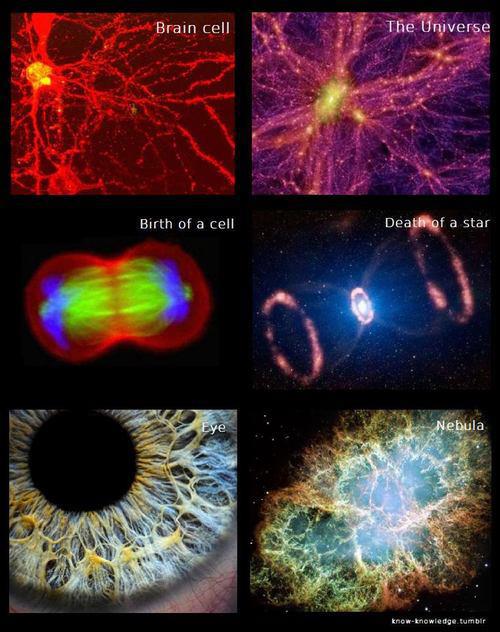 lead only pushed by the vague thought that life would be easier and longer together, so too have Humans, descendants of those multicellular forefathers, banded together to create new organisms only with the idea that life would be easier, and longer this way. And just like those mindless cells of the prehistoric oceans there is no way for us possibly fathom what could eventually come from the advent of these new organisms we are creating, which in turn have banded together to create cultures, ideologies, countries, and ultimately a species: Humanity, which has some semblance of organization, clarity and intelligence that would never have been achievable in the wild forests of solitude. Instead of everyone having to take care of everything, banding together has allowed us to specialize in certain fields while working together just like our cells have done to create our complex and long lasting organs.
These Seven Characteristics here applied to Cities apply to every level of Human organization, from the cellular to the global level. Astoundingly, all this happened with no Master Plan. The first Cavemen didn’t say “Ok listen up guys, here’s what’s were going to do…” unknowingly, instinctively our species simply replicated what has been done instinctively for the entirety of the story of Life on Earth, band together and evolve into something bigger than the individual. And because of that, because of the joining of Humanity allowing specialization and the resulting transcendence of ideas and cultures embodied by Cities over the short life span of the individual cell we have been able to accumulate enough knowledge to invent microscopes and see that the cells that make our bodies are the same as us which make up this that we call City, Civilization, Intelligence, and Humanity. The technical, scientific, and optical knowledge required to built a microscope to see things too small to see or eat is downright useless in a survival situation, yet this collectivization method of ours has allowed it to happen. Over the course of billions of years cells have banded together not knowing why, and now for the first time in the history of Life we are the few generations of carbon based life that can get a faint glimpse of why cells have done what they have done, and why we are doing what we are doing.
It is a mind-blowing process to try and imagine what new forms of Life might stem from our larger collective Human organizations. After all, multicellular life has not only created mankind, but a breathtaking array of organisms that make up Life on this Earth. There are organisms that live off the Sun, plants, which live in the desert, and plants which live in the cold. There are animals of all kinds who eat grass or each other, and who live here and there, insects that weave, fly, and crawl, there are birds in the highest reaches of the sky, and fish and other odd plants in the darkest depths of the Oceans. And finally there are Humans, who may not be able to fly by flapping their arms or break into a 65mph sprint, but who can create and continue the process of Life, and with enough time and dedication given to the larger organism of the City can recreate the miracles of Life and invent machines that can fly with the birds, swim with the whales, flirt with the stars, and begin to decipher the mysteries of Life.
I cannot imagine what revelations and evolutions further bonding and further specialization will bring, but I can rest easy in the fact that the process will continue on past the limits of my cellular life within the organism that you and I, and all our cells have helped to create.
Like what you see? Check out Part II – Symbiotic Needs and Maslow for more!
 Julien Dupont
One comment