
As I write, I see CNN clips of people chanting “USA USA USA!” in the street
s, and my Facebook is flooded with statuses of relief claiming victory for Obama as victory for democracy and reason. Yet the wave of jubilation serves only to make me uneasy as most people seem to ignore the most pressing issues that face the world today, and who’s attention is solely riveted to the spectacle of election. More than one vote occurred on election night, and they were all important.
The Good:
Among the high peaks of Colorado and the forests of Washington, amendment 64 and initiative 502 were passed respectively, making them the first states to legalize the use of Marijuana. The law will allow adults over 21 years of age to purchase and possess Marijuana for recreational use. It also introduces regulation and taxation of the plant, as well as governmental regulation for industrial growth of Hemp, a hugely beneficial plant banned for its association with Cannabis. This is a serious blow against the war on drugs, which has seen the systematic repression of Marijuana users and the closure of legal medical dispensaries. This is a step in the right direction, socially and economically as instead of spending millions to put innocent people in jail the state will now be able to allocate police and prison resources on more serious issues supported by the new inflow of money from taxation of Marijuana. However, use of Cannabis is still illegal at the federal at it will be to interesting to see if the states and the feds will lock horns over the issue. Even if the DEA decides to stomp out this initiative it still sets a precedent for the end of Marijuana prohibition in the United States. In the East, Massachusetts also voted on election night to legalize the use of medical marijuana, becoming the 18th state to do so.
Finally, Maine became the first ever state to legalize same sex marriage through a citizen’s initiative, and both Maryland and Washington voted “Yes” on referendums to allow same sex marriage. When the laws are brought into effect it will bring the total of states allowing gay marriage to nine: Connecticut, Iowa, Massachusetts, New Hampshire, New York, and Vermont being the previous six. So, election night saw victories for personal liberty at the end of oppressive laws in some states, but there was a also significant defeat on the night of the 6th of November.
The Bad (Horrible):
To the south of victorious Colorado and Washington dark clouds hang over California. Prop 37 to label products that contain Genetically Modified Organisms (GMO) was defeated Tuesday night by a 53% “No” to 47% “Yes” margin. GMO are crops whose genetic code had been modified, often to make it resistant to frost, drought, and pesticides. Monsanto, a leading biotech company and central opponent to prop 37 has been accused of being evil by anti GMO activits, and I’m inclined to agree. Their products have been banned in multiple countries from Peru to Russia, and have a history of various judicial problems such as a conviction of chemical poisoning in France, and bio piracy charges in India. Various studies have arose showing that GMOs have adverse effects on both health and the environment, which is why the sensible governments of the world are not rushing to embrace the technology as America has done. As well as covering the land with clouds of poisonous pesticide, Monsanto requires royalty payments of farmers who have patented GMO plants in their fields, whether they want them or not. Hundreds of thousands of farmer suicides have been put on Monsanto’s head as they drive poor farmers to bankruptcy and despair. The list of crimes and accusations is a long one, and I will not go into depth here as there are many excellent documentaries and articles on Monsanto’s actions. What matters here is that America is the stronghold for GMOs with 86% of its maize and 93% of its soy and cotton crops being GM as of 2010. More than 80% of food on American grocery shelves contains GMO products, and consumers have no way of knowing. Products labeled “natural’ can contain GMOs for all they know.
Enter prop 37. A citizen’s initiative that gathered nearly a million petition signatures in the 150-day period that required it to get five hundred thousand signatures to be on the ballot. The importance of this vote was crucial. If passed, this law would set a precedent in America, giving people the right to know what is in their food and to choose if they want to consume GMOs or not. Then, in a spectacular campaign of misinformation the pesticide industry discredited the measure. The industry spent 45 million dollars on the “No to Prop 37”campaign, outspending the citizen opposition 5 to 1. The biggest donations against the proposition came from industry giants like Monsanto, PepsiCo, Kraft and DuPont (ashamed of my namesake!). Furthermore, the campaign was accused of misrepresenting multiple groups such as the FDA, the National Academy of Science, and the World Health Organization among others, and was forced to pull its ads multiple times when said organizations found out their names were being used without approval. That Monsanto and friends would lie and spend such amounts to block Californian’s right to know is revealing of their product’s safety, and their faith in it, to say the least.
The defeat of the motion, in my opinion, struck a brutal blow to democracy. As crowds across the U.S chanted for Obama, big money had smothered a grassroots effort to pass a law in the true spirit of democracy. Oligarchy defeated democracy, and GMOs continue to thrive.
Fledgling democracy:
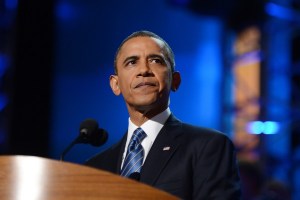
I will admit Obama seems to be a better alternative to Romney. However, I encourage those who see Obama as the savior of democracy and freedom to consider the policies he has pursued rather than those he has promised to. I will remind the reader that under Obama Wall Street banks who brought the economy to its knees received bailouts, that anti constitutional measures such as indefinite detention without trial were signed into law, that ex Monsanto officials were raised to position of power in the Food & Drug Administration (after Obama promised in 2007 to label GMOs), that medical Marijuana busts are higher than they were under Bush, that the southern leg of Keystone XL has received approval, that war still shadows the Middle East, and that aggression against Iran seems likely.
Many have claimed that Obama is doing the best with the situation he inherited, but I disagree. For example, he quietly signed the National Defense Authorization Act (NDAA) into law on January 1st, a law signed annually that regulates defense spending. However, in the 2012 edition there were measures under H.R 1540 Section 1034 that recognizes that the US are in in armed conflict with Al Qaeda, the Taliban, and associated forces, and that:
3) the current armed conflict includes nations, organization, and persons who –
(A) are part of, or are substantially supporting, al-Qaeda, the Taliban, or associated forces that are engaged in hostilities against the United States or its coalition partners; or
(B) have engaged in hostilities or have directly supported hostilities in aid of a nation, organization, or person descibed in subparagraph (A); and
(4) the President’s authority pursuant to the Authorization for Use of Military Force (Public Law 107-40; 50 U.S.C. 1541 note) includes the authority to detain belligerents, including persons described in paragraph (3), until the termination of hostilities.
The vague vocabulary used here essentially means that the United States government can detain anyone indefinitely without trial on suspicion of “supporting associated forces in hostilities against the United States”. The lack of clarity here allows for abuse and arbitrary designation of opponents as terrorists in a blatant violation of the Constitution, and was signed into law by a man who taught constitutional law at the University of Chicago. Popular protests and civilian action saw the law halted in the court of law, giving Obama a window to change his position. However, the government simply appealed the decision, and the previous ruling was overturned by a three-judge panel of the 2nd U.S Circuit Court of Appeals. President Barack Obama appointed all three judges who approved the signing of the NDAA.
Furthermore, the difference between both main party candidates was smaller than it appeared as both supported the same basic policies, giving Americans little variety on crucial issues. Both candidates support war and the use of drones, both support GMOs, both support bailouts, both are pro Marijuana prohibition (against popular beliefs as seen above), both are pro Keystone pipeline, and so on. Too few voters know that there were alternatives to the Democrats and the Republicans, and too few know, for example, that Jill Stein, presidential candidate for the Green Party, was arrested when trying to get into the presidential candidate debate featuring Obama and Romney. Is this democracy?
Obama is a good orator, and I do not believe him to be evil, but it is important to not get swept away in the frenzy surrounding him that sweeps under the rug the more dubious decisions he has made. Democracy is the idea of popular participation in politics, and it is not restricted to putting a mark on a piece of paper every 4 years. It is an ongoing process and requires the attention and care, as seen with the grassroots movements that brought to the ballot prop 37, of the population to survive. A better world will not be delivered on a silver platter, we need to hold our politicians accountable and work together to move toward the world we want to live in.
 Julien Dupont